What is product matching and why use it?


There are more than 2 million online retailers in the US. There's 305,000+ grocery stores. There are 18,000+ pet stores.
The retail landscape is vast and competitive.
How can retail businesses keep up with product matching?
Manually tracking attributes across the web isn’t realistic; it's expensive, error prone, and time-consuming.
To stay competitive and efficient, retailers must embrace automated product match solutions.
What is Product Matching?
Product matching is a form of data analysis where products are compared across different retailers' catalogs. Machine learning plays a crucial role in efficient product matching. It automates the process and improves the accuracy.
Product matching analyzes a range of attributes -- product name, pricing variants, description, brand, UPC, ratings/reviews, and images.
Product matches can be identified as exact or equivalent matches. Exact matches are identical products. Equivalent matches are similar, but not identical. We'll share examples of these below.
By comparing products, retailers can determine if two items from different catalogs are the same or similar. Then, the information is used for pricing, assortment, and promotions.
Retailers use product matching to gain a competitive advantage in their operations. It helps them monitor competitor prices, compare product offerings, inform promotional events, and streamlines the procurement process.

Exact Match Example
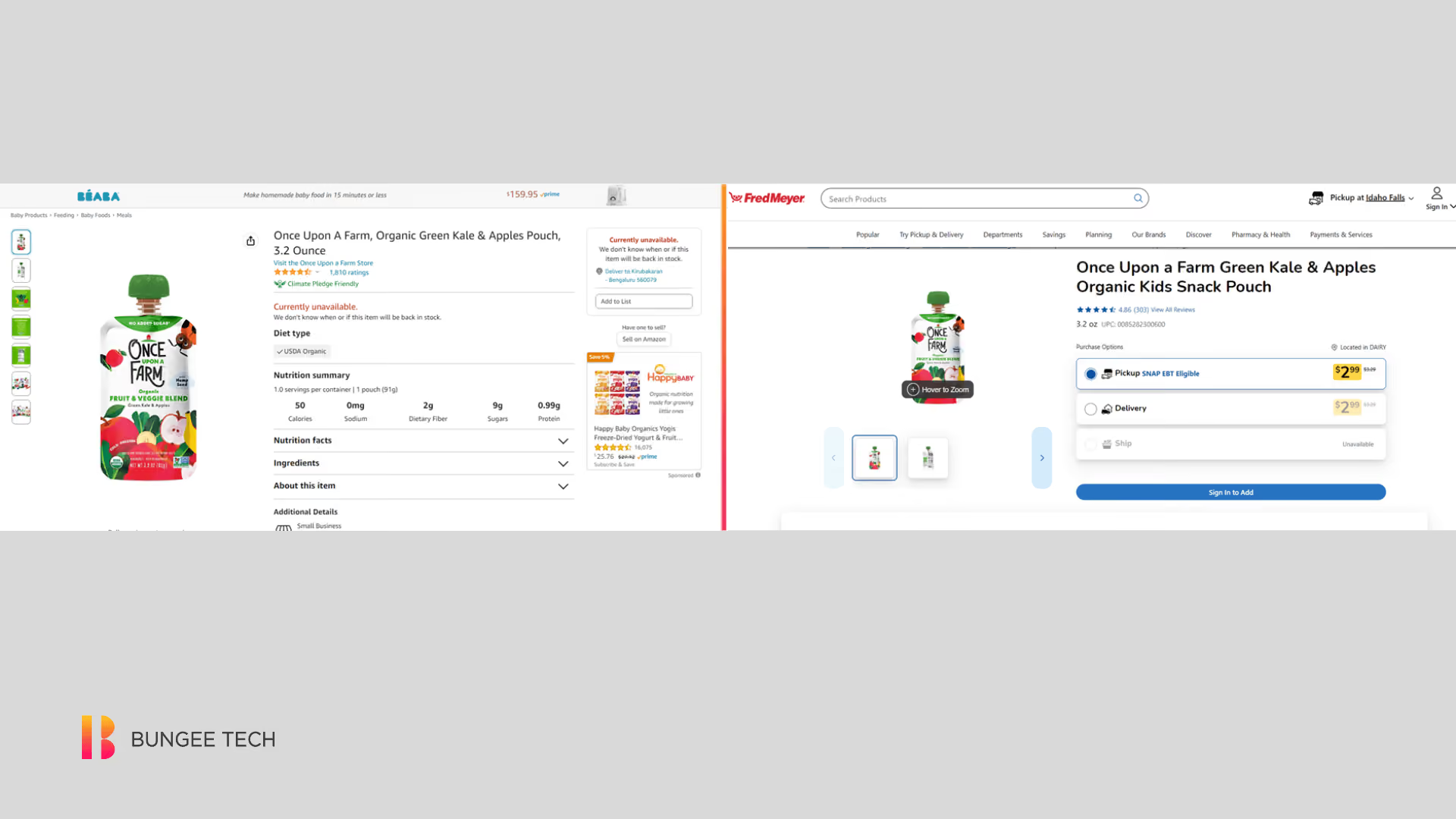
In the images below, we've shared two instances of the Once Upon a Farm on retailer websites.
Notice that the example on the left is out of stock. That's valuable information. An out of stock product might signal that there's strong demand for the product. Maybe our sales will increase, and we can capitalize on the competitors' OOS situation.
Regardless, the match data gives insights into market dynamics and potential opportunities.
Equivalent Match Example
For an equivalent (or similar) product match, the items are closely correlated, but not defined as exact.
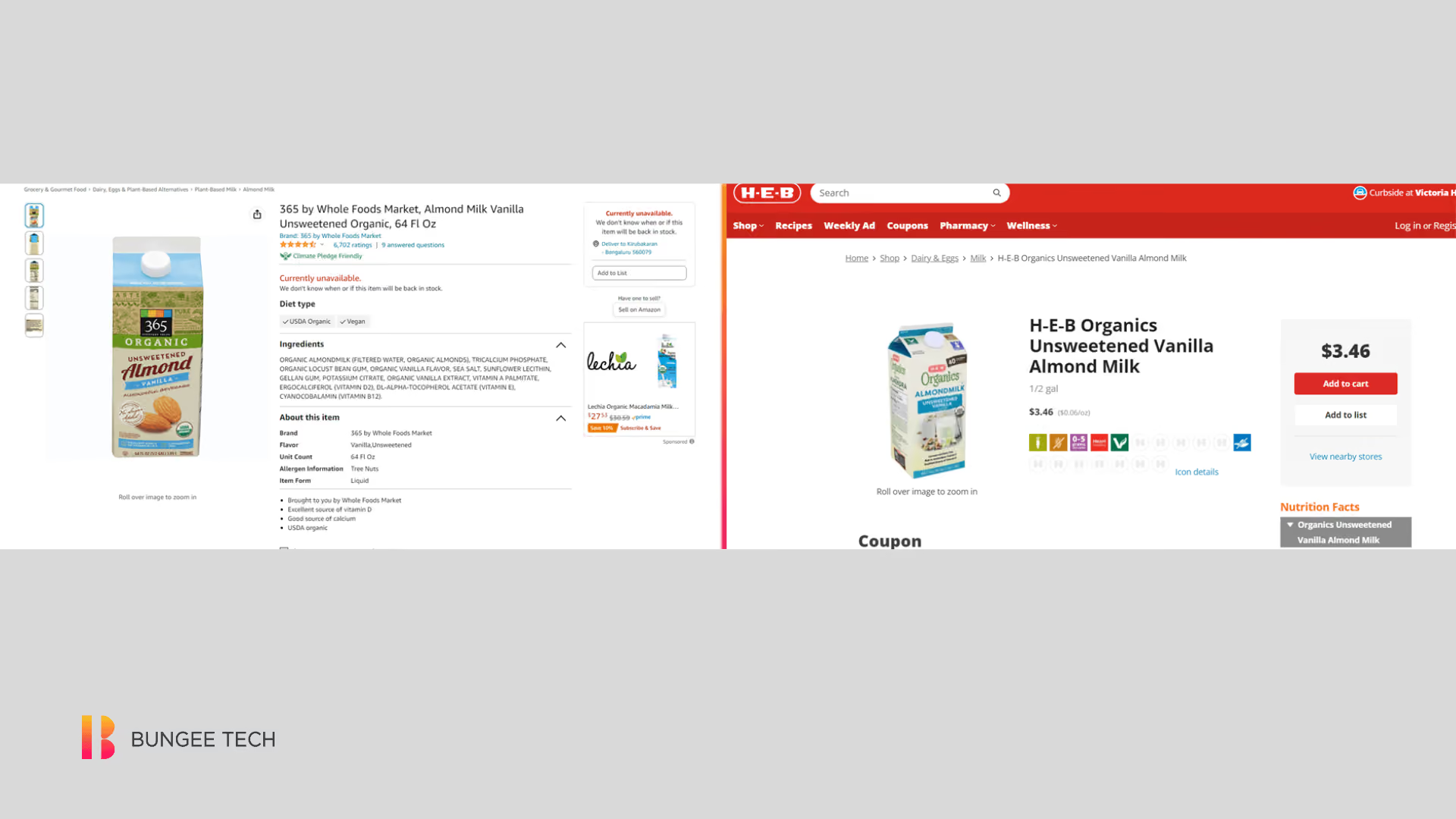
Look at the images below of vanilla, unsweetened almond milk.
Whole Foods private label and an H-E-B product. While the brand, descriptions, and price vary – the actual product is the same – vanilla unsweetened almond milk.
What are Benefits to Product Matching?
It’s a data-driven world and you’re expected to stay ahead of the curve. A winning retail strategy starts with effective product matching.
Product matching is critical to retailer success because it helps you recognize market position and optimize the customer experience (specifically related to consumer preference drivers like price, availability and assortment). By leveraging product matching across competitive catalogs, retailers can gain a competitive edge, improve their bottom line, and deliver a superior customer experience.
6 ways you’ll benefit from ML product matching:
+ Compare competitor catalogs
+ Identify assortment gaps and overlap
+ Price products competitively
+ See out of stock / availability across market
+ Streamline operations
+ Evaluate product performance
+ Make faster, data-driven decisions
What are Product Matching Challenges?
And while there are plenty of benefits to accurate product matching, it’s not a simple task – it’s a challenge for retail businesses of all sizes.
In our omnichannel world, we have more so many buying options… a quick search on our phone lets us quickly compare prices for pretty much any product we want to buy. Yes, some products are sold at the same price, with the same images across retailers, but that’s not always true.
Think about it like this:
You have to buy more dog food. First, you visit PetSmart's website where the dog food is labeled with a picture, regular price, and product description. Then, you check Walmart's website and find the same product for a different price, with a different image, and a longer description. Then, you look at Target's website to find another variation - of the same product.
Accuracy is a huge challenge because catalogs are inconsistent in category names, brand names, and other attributes. Other challenges are:
+ Poor data collection methods and a non-uniform process creates poor data quality and inability so scale product matching.
+ Retailers like Amazon famously adjust their pricing multiple times a day which makes manual matching repetitive.
+ It’s more complicated to match “similar” especially private labels.
+ Geographies might change their assortment offering.
All of this to say… you have to trust your data collection process and your product matching requirements. With machine learning, you can increase your coverage with confidence.
As a retailer, you want to simply match your catalog with all of your competitor's catalog listings - and know if you're comparing similar or exact matches.
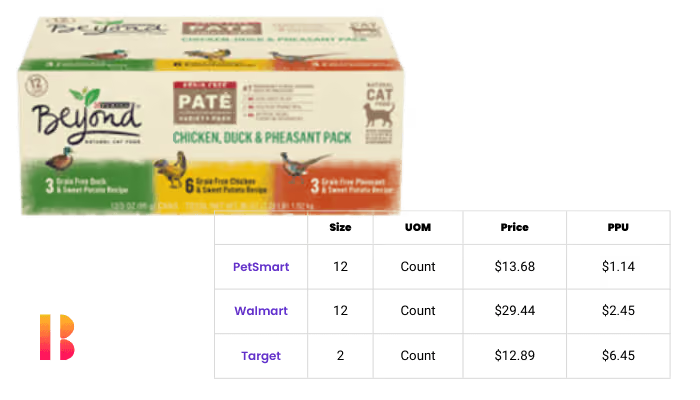
The impact (below) shows a cat food product that was quickly matched across three retail catalogs.
While the unit of measure is the same, the size and price are not.
We're able to normalize the price per unit so you can easily and quickly understand the market.
What's Next?
We recommend that retailers regularly collect high-quality data and monitor product matching to stay competitive. That means you can…
+ Identify pricing and promotion opportunities
+ Understand market price positions
+ Monitor MAP or UPP
+ Identify out of stock risks
+ Use historical data to track trends
We’re proud to offer retailers granular, comprehensive product matching results so that you can fully explore your competitive landscape.
With our patented data collection process, product matching is automated and less time-consuming. Retailers have the option to verify matches, add ad-hoc matches, and match against private labels. It's a faster, more effective approach.
Learn more about our retail competitive intelligence program here. If you're ready for a demo, reach out to our team today.
Our solution will to relieve your biggest headaches so you can focus on growth. It’s time for you to have real-time visibility into competitive catalogs and optimize your strategy.
Related articles

See it on your own data
Bring your categories and competitive set. See what the model recommends, and why.