Pricing with confidence: How grocers turn pricing science into strategy

When it comes to grocery retail, pricing isn’t just about numbers... it’s about strategy, perception, and purpose.
Grocery retailers have more data than ever but turning it into profit is a real challenge.
That was the focus of our recent webinar hosted by the National Grocers Association (NGA) and featuring ClearDemand's price optimization power-user Gelson’s Markets.
Click here to watch the replay.
From Reactive Pricing to Strategic Optimization
As discussed in the NGA webinar, price remains the #1 factor influencing where consumers choose to shop. Even loyal customers are more willing than ever to switch stores if they perceive better value elsewhere. Rising costs, persistent inflation, and the expansion of discount formats have forced every grocer — from independents to large chains — to rethink how they define value. That tension — between competitiveness and profitability — is what makes price optimization essential for today’s grocers.
"Most retailers aren’t short on data, they’re short on clarity. The challenge isn’t collecting information, it’s knowing how to act on it," said Seth Nieman, ClearDemand's Chief Strategy Officer. Grocers are juggling unpredictable supplier costs, shopper price sensitivity, and fierce competition from both discounters and mass merchants. The speakers agreed that every decision needs to consider elasticity, category roles, and competitive context.
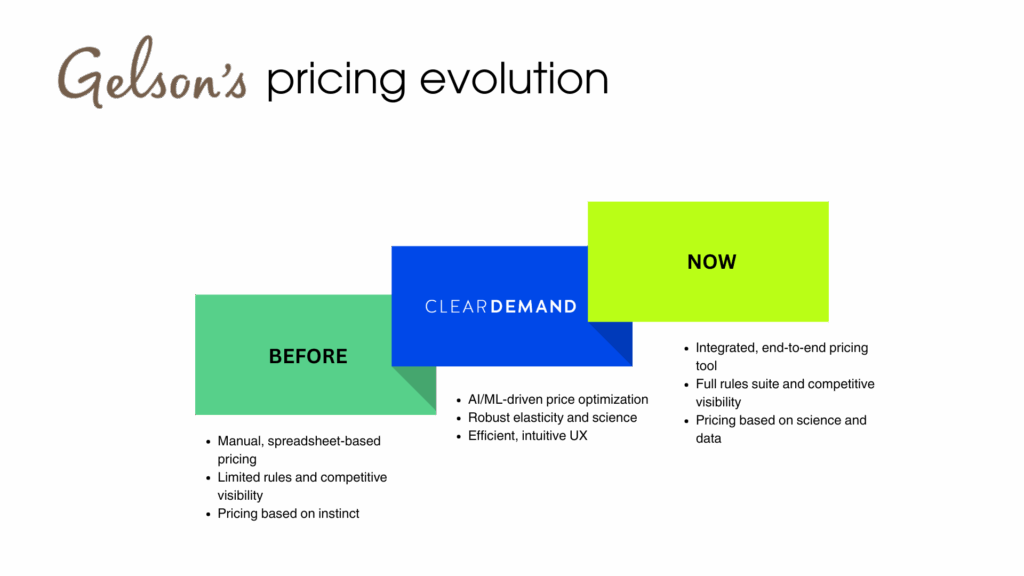
We asked Nathaniel Besser, Director of Analytics for Gelson's Markets to take us back to "day 1" - Before implementing ClearDemand price optimization solution.
Gelson’s, like many grocers, took a reactive approach to pricing. They monitored competitors, maintained ranges, and aimed to protect margins, but much of the work happened at the individual item level. It worked, but wasn’t scalable.
Besser explained, "Even with clean data, there was still work to be done. We started slowly, we’d look at a category, pick it apart, ask a lot of questions: why is this price going up, why is this price going down? That’s what led us to today’s approach... trusting the tool and understanding there’s a lot of science happening under the hood. Because we’re optimizing to the category, it’s less about individual item impacts and more about the overall category outcome."
Now, Gelson’s transitioned from item-level adjustments to category-level optimization, where elasticity, data modeling, and pricing rules define the balance between revenue, profit, and shopper loyalty.
The Opportunity Curve: Where Every Pricing Decision Begins
At the heart of Gelson’s process is the Opportunity Curve — a visualization that models the trade-offs between units, revenue, and profit.
Nieman explains that "this particular report is where the science meets the strategy, where pricing experts can have a real impact on the strategy of a category and see what’s possible to achieve across the business."
Rather than simply accepting a default system recommendation, Gelson’s team runs an optimization for each category, analyzing multiple scenarios before finalizing prices. For example, for a convenience category, "we might want to drive profit, versus a destination category where we’re more interested in driving more units too," said Besser.
It's become Gelson’s go-to tool.
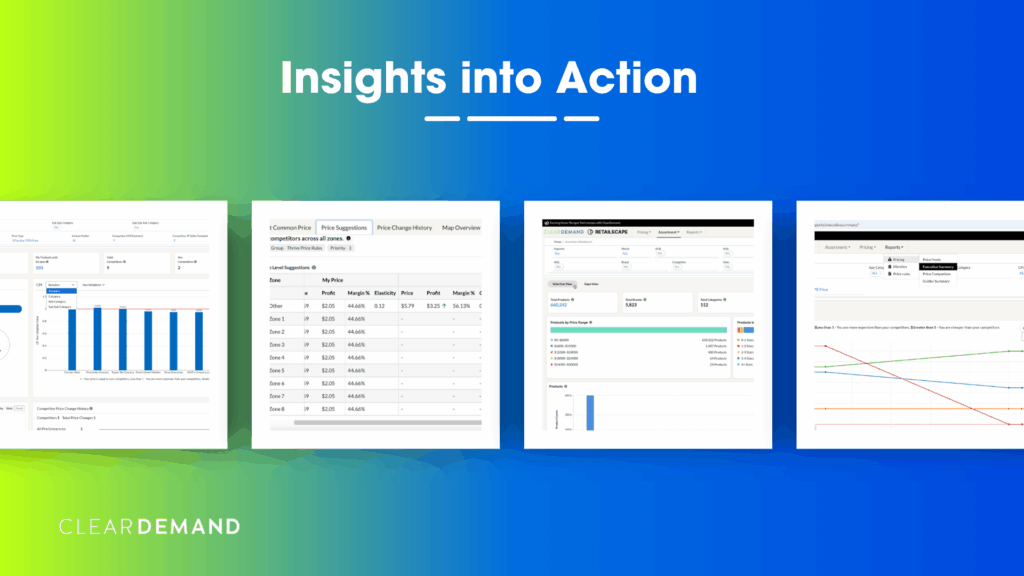
Besser shared, “We call it finding the trifecta - increases in units, revenue, and profit. When that’s not possible, we choose the next best point, a profit lift with minimal unit loss.”
That discipline ensures every category aligns with its role — whether driving traffic or maximizing margin.
Science That’s Explainable — and Actionable
Behind our approach are 3 cooperating AI/ML models that work together to:
1️⃣ Predict shopper response to price changes
2️⃣ Enforce business rules and guardrails
3️⃣ Balance profitability and compliance
This allows Gelson’s to bring clarity, transparency, and trust to pricing decisions - a major differentiator in a space where most optimization tools still feel like black boxes.
The system accounts for promotions, seasonality, holidays, cannibalization, and out-of-stocks, creating forecasts grounded in real-world demand signals.
“We’re not replacing human judgment,” added Nieman. “We’re giving analysts the data they need to make the best call.”
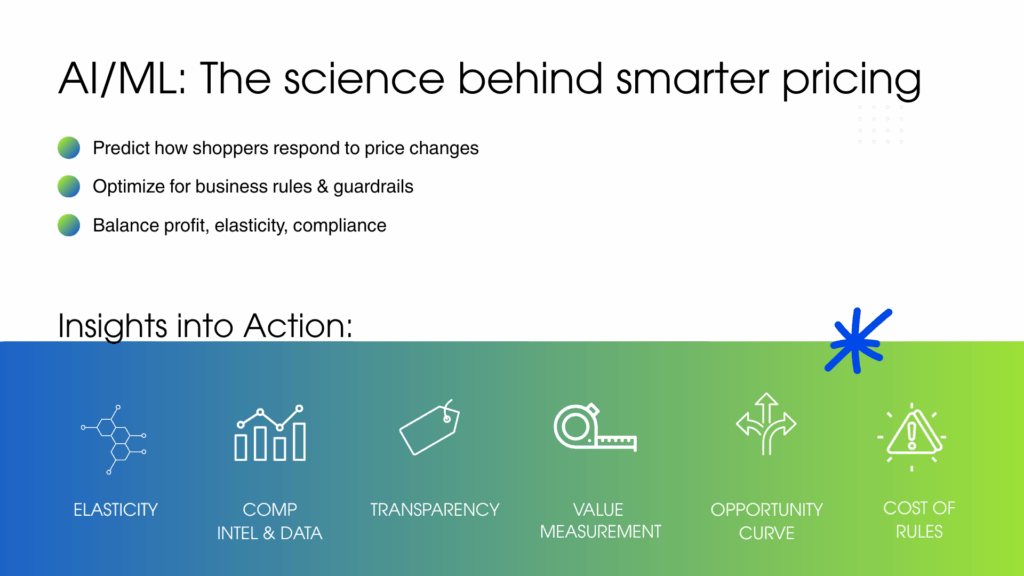
The Results: Pricing That Performs
Gelson’s now measures the financial impact of every optimization cycle through a process called Value Measurement.
By comparing actual results to system projections, they’ve proven measurable improvement. For a grocer that doesn’t compete on price, that’s a significant achievement.
As ClearDemand CRO Ryan Licari noted, “This is what happens when you combine clean data, disciplined processes, and explainable science. The result is confident, defensible pricing decisions that align with your strategy.”
Lessons Learned: Change Management and Trust
Implementing pricing science required patience and cultural change.
“We went slowly,” Besser said. “We picked categories apart, asked questions, and learned to trust the system. Optimization means some items win, others lose — but the category as a whole improves.”
He also stressed leadership buy-in:
“Having a champion in the C-suite is critical. It’s not ‘press a button and everything’s perfect.’ It’s a process.”
Confidence Through Clarity
For Gelson’s, the biggest shift isn’t just the results, it’s the mindset.
“Price optimization used to feel reactive,” Besser shared. “Now, it’s proactive and purposeful. We can model outcomes, measure impact, and make pricing decisions with confidence.”
That’s the future of grocery pricing: science-backed, explainable, and measurable.
Key Takeaways for Retailers
- Start with clean data. Reliable inputs make reliable recommendations.
- Think in categories, not items. Context drives smarter pricing outcomes.
- Measure value continuously. Optimization is a cycle, not a one-time project.
- Use science to guide strategy. Elasticity + rules = clarity and control.
Related articles

See it on your own data
Bring your categories and competitive set. See what the model recommends, and why.