Retail competitive intelligence glossary: Top 30 terms


We’re breaking down some of the most used retail pricing terms and defining competitive intelligence language.
Artificial Intelligence (AI)
Artificial intelligence is the ability for computer systems to perform tasks that normally require human intelligence. In retail, AI has many use cases - from chatbots to virtual assistants. We're using AI to help retailers optimize pricing, improve promotional events, and determine assortment. The global retail AI market is expected to grow at a CAGR of 31.8% from 2024 to 2032.
Assortment
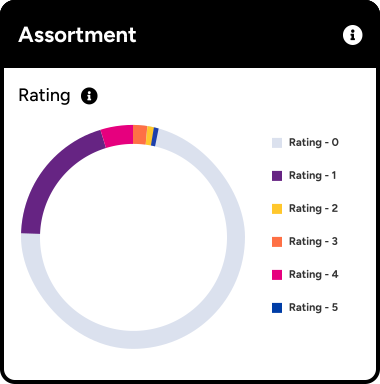
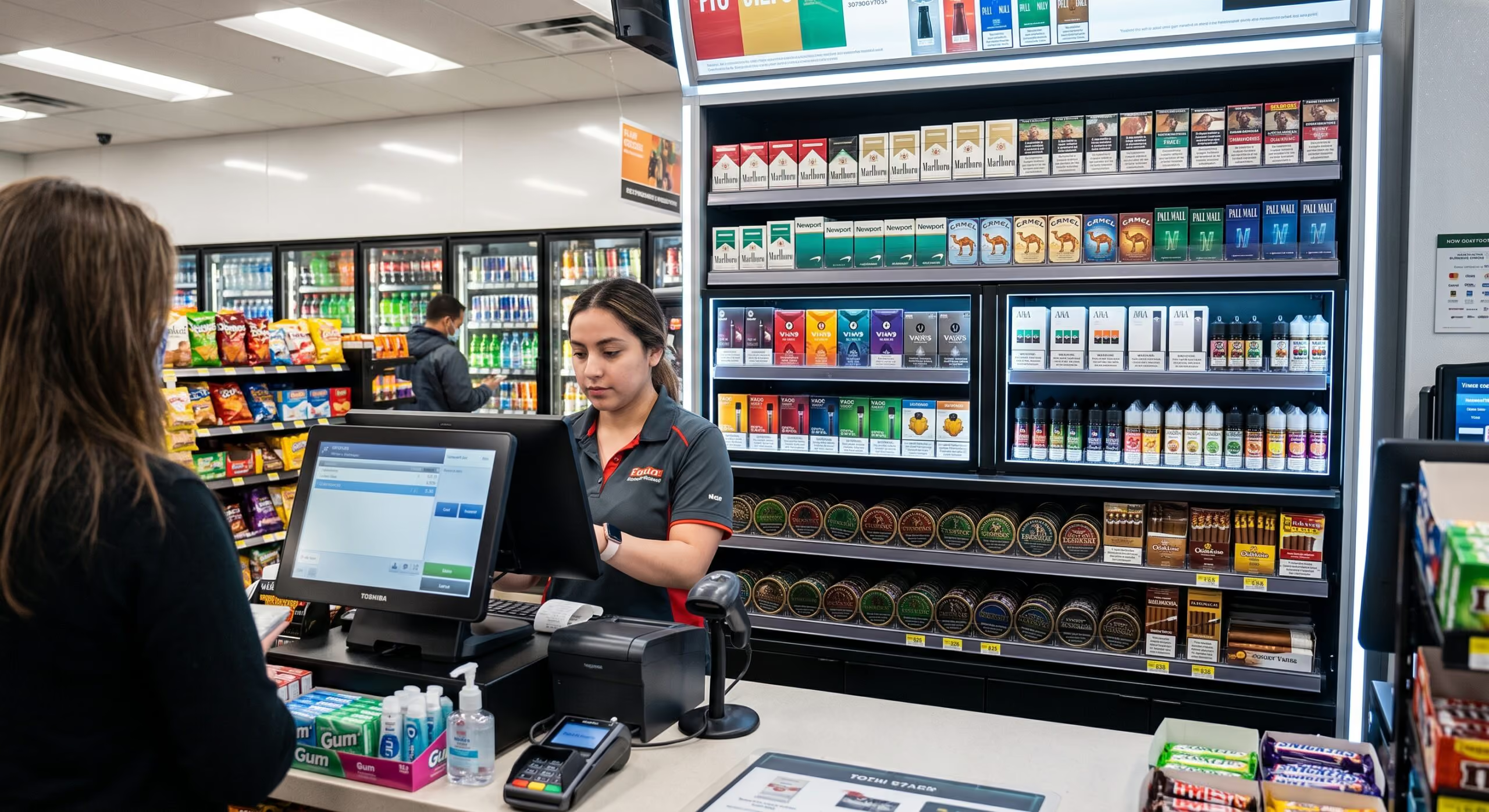
Assortment refers to a collection of products that a store sells to its customers. In retail, an assortment strategy involved the number and type of products that a store displays for purchase.
Benchmarking
A technique where you measure performance against other retailers. It’s used to determine opportunities and identify gaps.
» Learn the key benefits for retail price benchmarking
Cannibalization
Volume stole from a competitive product or other product in a manufacturer’s product line when a promotion exists for a specific item.
Competitive Intelligence
Competitive intelligence is the process of gathering, matching, and analyzing data to gain knowledge about your competitive environment. Retailers capture competitive intelligence across price, promotion, assortment, and availability data to drive organizational growth.
Competitive Landscape
Think of the competitive landscape as a visual representation of competing businesses. A comprehensive view of the competitive landscape helps retailers understand business drivers and obstacles.

Customer Segment
A customer group that shares similar traits (demographic, geographic, behavioral).
Data Harmonization
The process of aligning data from various sources (internal and external) and transforming the data into one cohesive dataset.
Data Mesh
An industry-leading approach to data management. It defines a clear, domain-based design paradigm to group and manage datasets ownership.
Data Mining
Collecting large databases to identify new information, patterns and trends. In retail, data mining is usually used to analyze customer and competitor data.
Ecommerce
Buying and selling of goods and services via the internet.
Endless Aisle
A feature of a physical store that enables the customer to browse the entire catalog of products. Instead of stocking every product in store, this allows a shopper to see all products on a tablet.
Inventory Shrinkage
The difference between recorded inventory and actual inventory. This typically happens because of a clerical error, damaged or stolen goods. If shrinkage is large, then a retailer’s profit decreases.
KVI: Key Value Item
KVIs are the products that customers usually purchase when they shop. Generally, KVIs are the products that consumers remember prices for.
KVIs are critical to staying competitive. Learn more »
Loss Leader
A pricing strategy where goods or services are offered at discounted rates (even below cost) to attract customers.
Machine Learning (ML)
The use and development of computer systems that are able to learn and adapt without following explicit instructions, by using algorithms and statistical models to analyze and draw inferences from patterns in data. Machine learning in retail is useful to process data, identify patterns, and discover gaps.
MAP: Minimum Advertised Price
The minimum advertises price is a pricing policy that doesn’t allow retailers to advertise prices below a specific amount.
Market Basket Analysis
A data mining technique used by retailers to increase sales by better understanding customer purchase patterns.
Launch a differential market basket analysis with these best practices »
Market Share
The measurement of product performance in comparison to competitors – calculated by driving brand sales from category sales.
Merchandise Mix
The breadth and depth of the products carried by retailers. Also referred to as product mix.
Mystery Shopping
An in person research method used to evaluate assortment, pricing, promotions, and availability.
Omnichannel
Commerce that integrates different methods (online, mobile apps, in store) so that customers can engage across the channels simultaneously.
Out of Stock
Commerce that integrates different methods (online, mobile apps, in store) so that customers can engage across the channels simultaneously.
Price Intelligence
Gathering omnichannel price data then tracking, monitoring, and analyzing the information in order to optimize pricing strategy.
Product Matching
Product matching is a form of retail data analysis and the process of matching exact, equivalent, or similar products across various sources.
★ Everything you need to know about product matching here
Price Elasticity
A measure of the relationship between a change in the quantity demanded of a particular product and a change in its price.
Showrooming
Checking out merchandise in store, but buying online.
Trade Promotion
When a retailer is paid by a manufacturer to launch events with a goal to increase product sales.
Webrooming
Checking out merchandise online, but buying in store.
Web Scraping
Extracting data from websites.
Related articles
See it on your own data
Bring your categories and competitive set. See what the model recommends, and why.