Why Price Wars Hurt Grocers – and What to Do Instead
Reading Time: 11 Minutes
Most grocers can’t point to which price changes drive profit (or which ones quietly destroy it).
That’s because pricing decisions are reactionary.
Cut a price because a competitor did.
Hold prices because “that’s what we’ve always done.”
Follow rules rigidly, or ignore them entirely, just to keep up.
In grocery, where rules are complex and margin tolerance is razor thin, pricing without insight turns every adjustment into a gamble.
True price optimization removes the guesswork and enables strategic data-driven decisions about when to change price, when to stay the course, and what’s at risk, before a single tag is changed.
The Biggest Misunderstanding About Price Optimization
Let’s start with misconceptions we still hear from grocery teams: “Price optimization means constantly changing prices,” or worse: “It’s a black box that tells us to lower prices.” I’ve even heard grocers tell us, “Optimization doesn’t work well for fresh or private label.”
Another big misconception is that price optimization and dynamic pricing are the same thing. They’re not. Dynamic pricing reacts to signals – think of ride sharing, airlines and hotels, even concert or sporting events – where prices change frequently in response to demand, inventory, or timing. By contrast, price optimization is more evaluative. It gives grocers the tools to understand demand and margin before prices move to ensure shoppers don’t see constant price swings.
The race-to-the-bottom mindset assumes that price optimization is about:
- Being cheaper than competitors
- Moving prices faster
- Matching the market at all costs
This isn’t price optimization… it’s price following.
Industry research shows why this “follower” approach fails: Analysts from McKinsey and BCG have identified pricing as one of the fastest levers for improvement in retail and one of the easiest ways to destroy value when decisions aren’t truly evaluated before execution.
We know price sensitivity varies widely across your assortment. A small group of highly visible key value items shape price perception, while others can tolerate price changes with minimal impact on image or demand. Even so, many grocers treat each item as equally price sensitive, which doesn’t improve margin, loyalty, or long-term performance.
True optimization, by definition, reduces unnecessary price movement. It’s not about chasing the lowest price. It’s not about blanket price increases. Price optimizations should be transparent and tell you about the impact on revenue and profit. Price optimization should account for complex categories. It should help you strategically align price with demand patterns, assortment, and market competition. It should do so in a way that balances revenue with customer perception & loyalty.
At the core of these misunderstandings is trust. Grocers need visibility into actionable opportunity, forecasted benefit, and resulting value after activation.
The Better Pricing Play: Price with Intention
Ditch chasing the lowest price and start pricing with intent.
Price optimization is the opposite of a race to the bottom. It’s about identifying the right price — for every product, in every store.
Using price optimization software, grocers take critical capabilities like demand modeling, elasticity, pricing rules, and value measurement to:
- Avoid costly price cuts
- Improve assortment decisions
- Protect margin
- Build shopper trust
- Optimize category performance
According to Deloitte, many retailers still struggle to explain the ROI of pricing decisions. Understanding the value of every price change is critical. When you isolate the real impact of pricing decisions, you can evaluate outcomes before and after prices change, enabling more confidence in your strategy.
Benefits of Price Optimization for Grocery
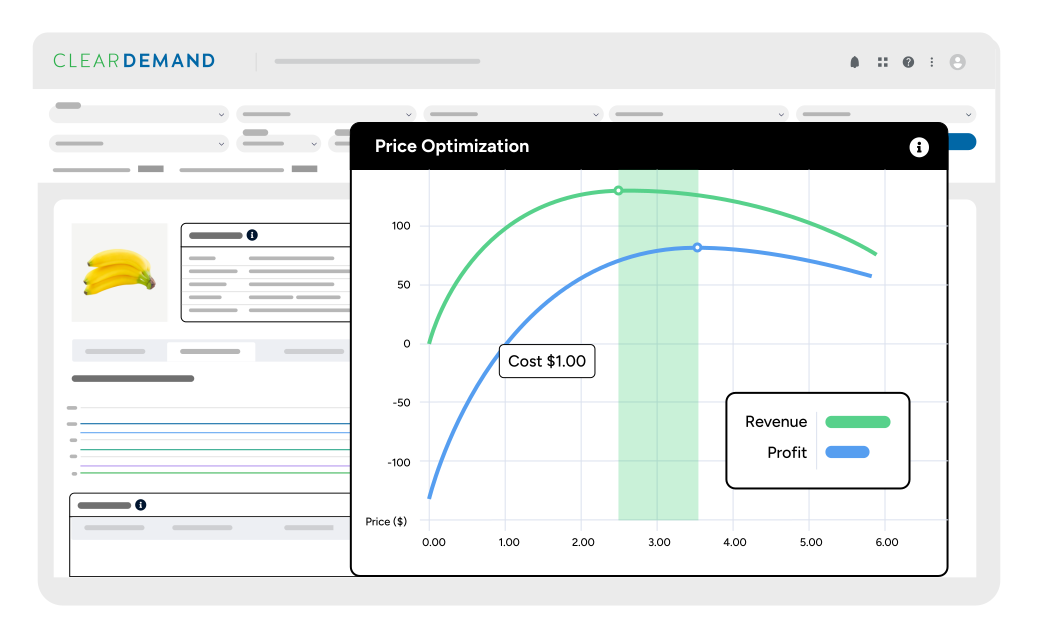
Don’t just monitor competitor prices or blindly implement intuitive price changes. Use an end-to-end solution that predicts customer response to price changes, automates price recommendations with built-in business rules, and measure the value of price changes so every pricing decision is informed, strategic, and measurable.
Here are 4 ways grocers are benefiting from ClearDemand’s price optimization engine:
- Close competitive gaps that matter: Leading grocers aren’t chasing every competitor move. They focus on SKU-level price and assortment gaps that influence shopper perception. They hold price where selection is differentiated. ClearDemand helps grocery teams pinpoint where competitive action is required and where margin can be protected.
- Make price changes with confidence: Pricing decisions shouldn’t rely solely on intuition or a fear of being undercut. Use elasticity to understand how shoppes respond. Identify where price increases will be profitable. Know how competitive your pricing is in the market.
- Align price recommendations to strategy: Use price optimization software to enforce your strategy. ClearDemand embeds data science, business rules, and guardrails directly into the pricing workflow ensuring price recommendations reflect how you choose to compete and grow.
- Prove impact and scale what works: Measure what drives results. ClearDemand’s price optimization platform identifies the true effect of pricing decisions (separating signal from noise) so winning strategies can be scaled across your categories, zones, and stores.
Why Grocers Choose ClearDemand Price Optimization
We’re not just a software provider — we’re a strategic pricing partner built for grocery retail. We help teams build pricing expertise, improve ROI, and align pricing strategy, all while protecting margin and preserving customer perception.
Our platform supports the industry’s most complex needs, including:
- Competitive data and price rules unification
- Price zone clustering based on shopper behavior and elasticity
- Assortment gap management and analytics
- Incorporate cannibalization and affinity into your promotional strategy
- Seamless integration with POS, ESLs, signage, and merchandising systems
- Quantify the impact of every pricing action
Before your next price change, ask yourself: “Are we reacting to the market or pricing with intention?”
Understand the opportunity and risk behind your competitive pricing decisions. Watch this webinar recap to see how leading grocers approach price optimization – from demand modeling and pricing rules to value measurement. See how these capabilities work together to support confident, intentional pricing.
If you think you’re ready to take the guesswork out of pricing, get in touch with us today!


How One Grocery Retailer Used Price Optimization to Boost Profit +2.78%
When you’re a premium grocery retailer, every price point matters. Discover how a leading grocery retailer, facing the everyday challenges of the retail
Read
The Price of Trust: Why Transparency is the New Competitive Advantage in Grocery
For regional grocers, trust is a valuable currency. While national giants compete on sheer omnipresence and magnitude, regional grocers compete on customer connection. Your customers know your
Read
2026 Grocery Pricing Readiness Checklist: Compete Smarter with Data, Elasticity, Optimization
With new year planning underway, grocery category managers and pricing teams are asking, » Where do my prices stand in the market? »
Read
Why Price Wars Hurt Grocers – and What to Do Instead
Most grocers can’t point to which price changes drive profit (or which ones quietly destroy it). That’s because pricing decisions are reactionary. Cut
Read
Holiday Pricing Needs More than Best Practices – It Needs Science
Holiday pricing is the most chaotic period in grocery. The season dramatically distorts pricing behavior. Elasticity bends. Demand swings. Competitors are unpredictable. Shoppers
Read
Retail Pricing Optimization: The Trends Reshaping Grocer Profitability
Heading into 2026, grocers face a familiar but complex challenge: balance profit, perception, and price image in a market that won’t settle. Even as inflation slows,
Read
KVI Analysis: How a Few SKUs Can Transform Your Price Image
Shoppers don’t memorize every price throughout your store. They remember a handful of high-visibility items and use those prices to judge your overall
Read
Pricing with Confidence: How Grocers Turn Pricing Science into Strategy
When it comes to grocery retail, pricing isn’t just about numbers… it’s about strategy, perception, and purpose. Grocery retailers have more data than
Read
Everyday “Fair” Pricing – The End of Hi-Lo as We Know It?
Is Alix Partners on to something? Every shopper loves a deal and today, finding one only takes a swipe. With smartphone in hand,
ReadThe Latest Insights – Straight to Your Inbox
Sign up for the ClearDemand mailing list for actionable strategies, upcoming events, industry trends, and company news.