Tobacco Buydown Compliance: Why Enrolled Retailers Still Lose Money
Reading Time: 11 Minutes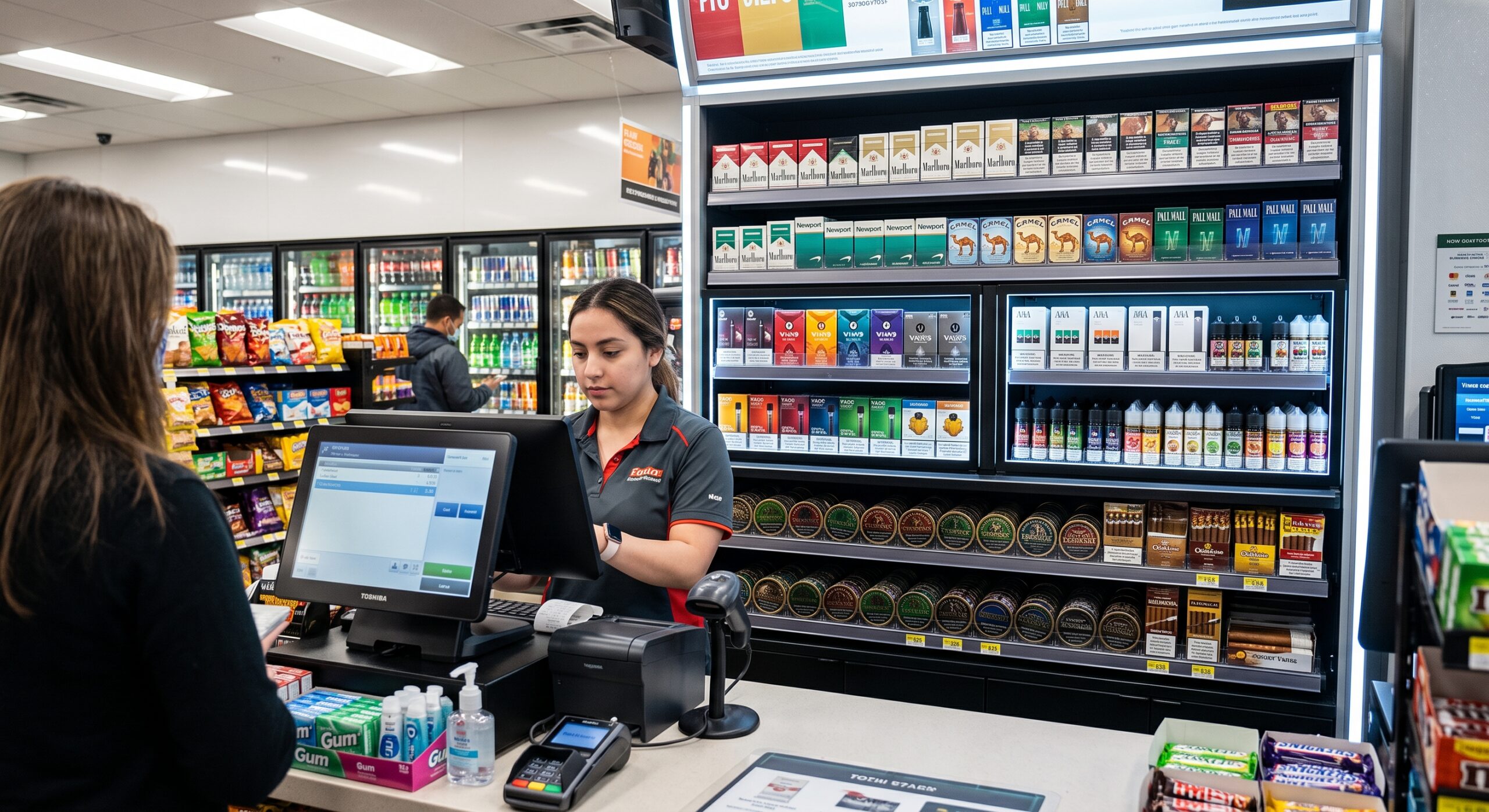
Most tobacco buydown money is lost to price drift rather than missed enrollment. A chain can be signed up for every program, reporting scan data on schedule, and still forfeit rebates because an allowance changed and the shelf price no longer matched it. Nothing in the transaction fails, but the rebate pays at zero. That, in a nutshell, is why tobacco buydown compliance is a challenge.
Manufacturers put most of their promotional money into your store rather than into advertising. The Federal Trade Commission’s most recent cigarette report put total advertising and promotion at $8.01 billion, of which $5.74 billion went to price discounts paid to retailers. That is 71.7% of all category spending, and all of it moves through the price you set. Here is why it goes missing:
1. What happens when an allowance moves mid-cycle?
A loyalty buydown set at $2.60 changes to $2.80. A store still ringing $2.60 no longer matches the current program terms.
The register accepts the sale, the customer pays, and the rebate for that transaction pays at zero. Nothing breaks and no exception report appears, because from the system’s point of view nothing went wrong. A month later somebody reconciles the statement, finds a number smaller than it should have been, and has no account of which items caused it. One ClearDemand customer pricing tobacco at a top-20 convenience retailer noted, “my price was off by one penny, and I lost a $100,000 buydown.”
2. Three manufacturers, all with different terms
Altria runs the most structured program. Its Digital Trade Program sorts participating retailers into four tiers, and each tier unlocks higher stacked rebates.
To keep you on your toes, however, Reynolds and ITG Brands work differently. Reynolds focuses on volume-based rebates, multipack discounts, and validation-backed buydowns handled through data processors. ITG relies on flat data compliance and basic multipack functionality. Neither uses a tiered structure.
That leaves you with three sets of terms, three calendars, and category pricing that has to stay aligned with all of them.
Geography adds a further constraint. Some states restrict or prohibit tobacco rebate and scan data programs outright, which makes stores in those markets ineligible regardless of enrollment or technology.
3. Why is compliance no longer just a pricing question?
Altria’s tiers ask for more technical capability as you move up: automated scan data at Tier 1, age validation technology at Tier 2, electronic age and identity verification at Tier 3, and loyalty segmentation at Tier 4.
Compliance used to be a simple pricing equation but is now a register and systems question. The pricing team often finds out about a requirement after the deadline for it has passed.
4. Loyalty-funded multipacks split the price in two
Loyalty-funded multipacks attach the discount to a customer identity rather than to a product. The same item carries a different funded price depending on who is standing at the register.
Your rules engine publishes one of those two numbers. The other one lives in the loyalty program, and both need to be right for the rebate to pay.
What does 100% buydown compliance require?
Four things must be true at the same time.
Manufacturer funding must arrive as data rather than as a formal notice, and subtract from cost automatically. Mid-cycle changes surface on their own rather than waiting for reconciliation. Every rule that touches a tobacco price should live in one place, with a priority order your team sets in advance. Then prices move inside the window manufacturers give you.
That last bit is getting harder to manage as major manufacturers moved from two price increases a year to three or four, in recent years.
Frequently asked questions
What is a tobacco buydown?
Manufacturer funding that lowers the shelf price of a specific product for a set period, paid back to the retailer per transaction. To qualify, the retailer must ring the exact contracted price and report scan data on the manufacturer’s schedule.
Why do retailers lose buydown money if they are enrolled?
Because enrollment and compliance are different things. Programs change mid-cycle, and a price that no longer matches the current terms pays nothing. The failure is silent, so it usually surfaces weeks later in reconciliation.
Do all tobacco manufacturers run the same buydown program?
No. Altria runs a four-tier Digital Trade Program with escalating technical requirements. Reynolds uses volume-based rebates and validation-backed buydowns handled through data processors. ITG relies on flat data compliance. Each carries its own terms, reporting, and calendar.
What happens if my price is wrong during a buydown?
The sale completes normally and the rebate for that transaction pays nothing. No error appears at the register, so the shortfall shows up weeks later in reconciliation without an item-level explanation of what caused it.
What is Altria’s Digital Trade Program?
Altria’s tiered retail incentive structure, with four tiers. Higher tiers require more technical capability and unlock higher stacked rebates. Reynolds and ITG Brands run their own programs with separate terms.
How often do buydown programs change?
Roughly monthly, and retailers are typically given a few days to move prices before new terms take effect.
Where to go next
ClearDemand unifies competitive intelligence, price and promotion optimization in one platform, purpose built for grocery and convenience retail. Tobacco pricing is one of the complexities we help solve for by accounting for the myriad forces impacting the category. We can integrate directly with the tobacco companies to ensure you stay on top of buydowns.
Some additional resources offered by ClearDemand:
- If you are still framing the problem, the Pricing Tobacco eBook covers buydowns alongside the other three forces that constrain a tobacco price.
- If you want to diagnose where you are in your pricing journey, our self-guided Pricing Maturity Assessment takes about 10 minutes.
- If you want to chat with one of our experts about how ClearDemand can help you master buydown compliance, request a demo and bring your hardest tobacco pricing problem to us.


Tobacco Buydown Compliance: Why Enrolled Retailers Still Lose Money
Most tobacco buydown money is lost to price drift rather than missed enrollment. A chain can be signed up for every program, reporting
Read
Same store, two economies: everyday fair pricing for the K-shaped grocery aisle
High- and low-income shoppers now fill their carts under the same roof. Here is why one pricing strategy can no longer hold both,
Read
Build or Buy: AI Price Optimization for Grocery and C-Store CIOs
You’re the technology leader at a regional grocery or convenience retailer, and your pricing team is underwater and asking for help. Competitors move
Read
How One Grocery Retailer Used Price Optimization to Boost Profit +2.78%
When you’re a premium grocery retailer, every price point matters. Discover how a leading grocery retailer, facing the everyday challenges of the retail
Read
The Price of Trust: Why Transparency is the New Competitive Advantage in Grocery
For regional grocers, trust is a valuable currency. While national giants compete on sheer omnipresence and magnitude, regional grocers compete on customer connection. Your customers know your
Read
2026 Grocery Pricing Readiness Checklist: Compete Smarter with Data, Elasticity, Optimization
With new year planning underway, grocery category managers and pricing teams are asking, » Where do my prices stand in the market? »
Read
Why Price Wars Hurt Grocers – and What to Do Instead
Most grocers can’t point to which price changes drive profit (or which ones quietly destroy it). That’s because pricing decisions are reactionary. Cut
Read
Why Rule-Based Pricing Keeps You Grounded
Post written by IDC.com Price is the paramount factor for consumers making purchasing decisions. Price continues to the be the primary lever that
Read
Holiday Pricing Needs More than Best Practices – It Needs Science
Holiday pricing is the most chaotic period in grocery. The season dramatically distorts pricing behavior. Elasticity bends. Demand swings. Competitors are unpredictable. Shoppers
ReadThe Latest Insights – Straight to Your Inbox
Sign up for the ClearDemand mailing list for actionable strategies, upcoming events, industry trends, and company news.